
Bhupinder Malhotra
Director – Industry Studies | Industrial Markets | Strategy | Growth
February 23, 2026
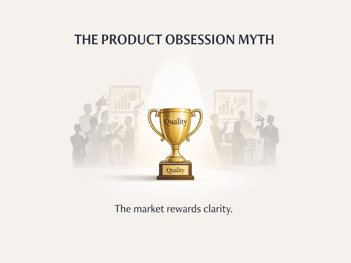
- “If the product or service is good, it will sell itself.”
- “We don’t need to focus much on selling because our offering is strong.”
It sounds logical. It feels fair. It appeals to the belief that quality should naturally win.
But let’s pause and ask:
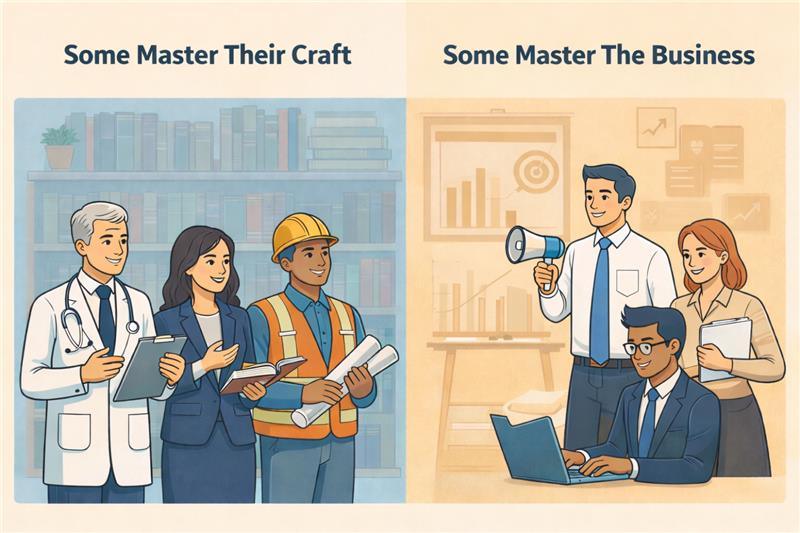
If quality alone sold, Would the best engineer, consultant, lawyer, or technician always be the most successful entrepreneur?
Reality suggests otherwise.
Many exceptional products and services never reach the full potential of the company behind them not because they lack capability, but because they lack commercial structure around them. The market does not automatically reward craftsmanship or expertise.
It rewards:
- Clarity
- Positioning
- Trust
- Visibility
- Consistency
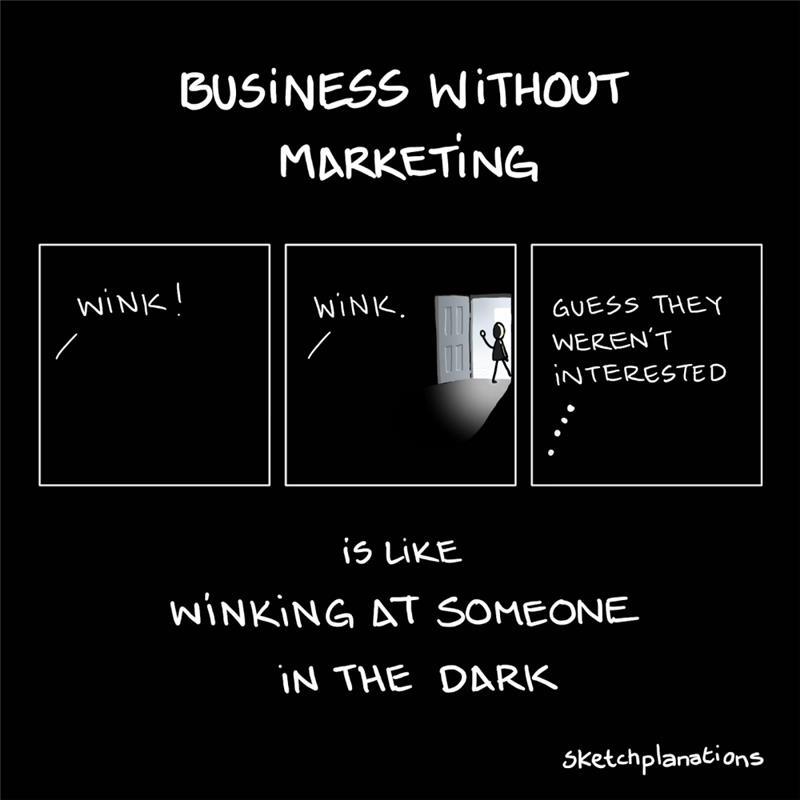
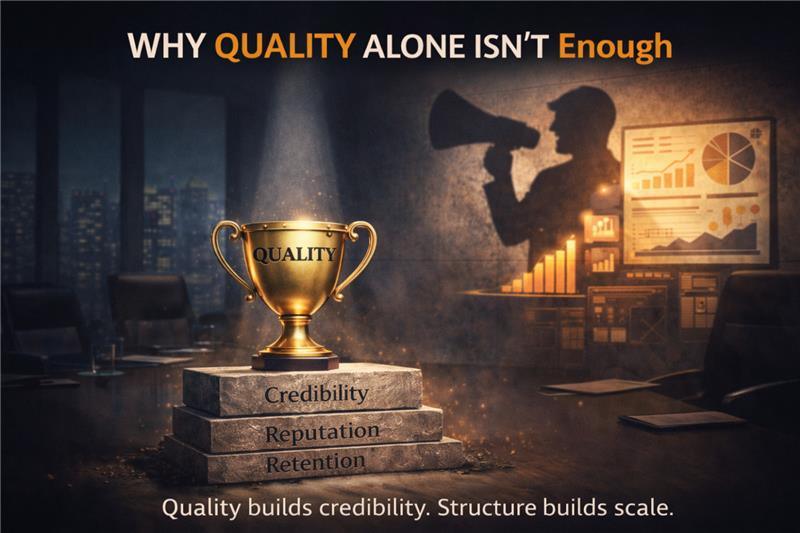
Why Quality Alone Isn’t Enough
Whether you build a product or deliver a service, quality is fundamental.
- It builds credibility.
- It strengthens reputation.
- It supports retention.
But growth requires more than excellence in delivery.
Customers today evaluate:
- Better features
- Better service experience
- Better responsiveness
- Better communication
- Better overall value perception
Businesses that scale are not only improving their product or service They are continuously refining their proposition and positioning.
If people do not clearly understand:
- What you offer
- Who it is for
- Why it matters
- Why it is priced the way it is
They hesitate. And hesitation slows momentum.
A strong product or service is the entry ticket. It is not the growth engine.
What Really Limits Growth
After the offering is built, something less visible begins to influence performance.
- Not dramatic.
- Not obvious.
- But costly over time.
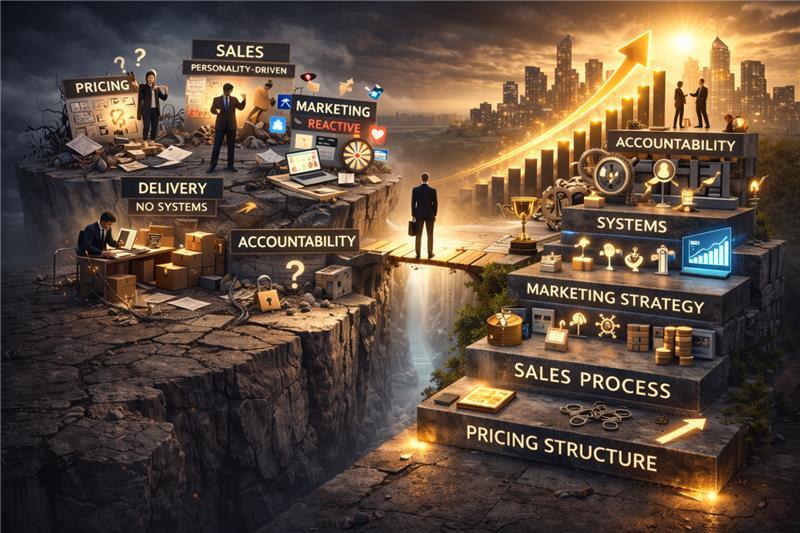
Growth stalls when:
- Pricing lacks defined structure
- Sales depend on personality instead of process
- Marketing is reactive instead of strategic
- Delivery depends on memory instead of systems
- Accountability is unclear
You may have:
- Strong domain expertise
- Technical depth
- Experienced teams
- Loyal customers
Yet the business struggles to move beyond a certain turnover threshold. Not because the product or service is weak but because the commercial structure is underdeveloped.
Skill keeps a business operating. Systems allow it to scale.

The Risk of Technical Overconfidence
Deep domain expertise is powerful. But when expertise replaces commercial discipline, growth narrows.
We often see:
- Service firms resisting structured marketing
- Technical founders dismissing branding as unnecessary
- Leaders believing “our work speaks for itself”
- Customer experience treated as secondary
- Excellence in execution must be supported by excellence in positioning.
- Without commercial maturity, even strong products and services struggle to expand their reach.
- Adaptability and service orientation are not compromises. They are competitive advantages.
The Real Shift That Must Happen
The shift is simple, but transformative:
Stop focusing only on improving the product or service. Start building the business architecture around it.
A real business is designed to:
- Operate consistently
- Sell through defined processes
- Market with direction
- Deliver with standards
- Scale without chaos
When structure exists, growth becomes predictable. When structure is missing, growth remains dependent on the founder’s constant involvement.
Why Growth Must Start With Questions
Before investing in more product development or expanding service capability, leaders must ask:
- Is our pricing structured or reactive?
- Is our sales process defined or personality-driven?
- Is marketing intentional or occasional?
- Can the business function smoothly without the founder at the centre?
- Are we positioned clearly in the market?
Growth challenges are rarely product or service problems. They are structure problems. And structures can be built.
90-Day Structured Commercial Engagement
At Progwell Consultancy, we work with product-based and service-based businesses to institutionalise growth.
In 90 days, we focus on:
- Commercial clarity
- Structured pricing models
- Defined sales processes
- Strategic marketing direction
- Accountability frameworks
- Reduced founder dependency
The goal is not noise. Not theory. Not surface-level changes. The goal is measurable movement beyond current revenue ceilings.
– By Bhupinder Malhotra